Blog
LiFePO4 vs NCM Batteries for Electric Bikes: How to Choose and Calculate Range
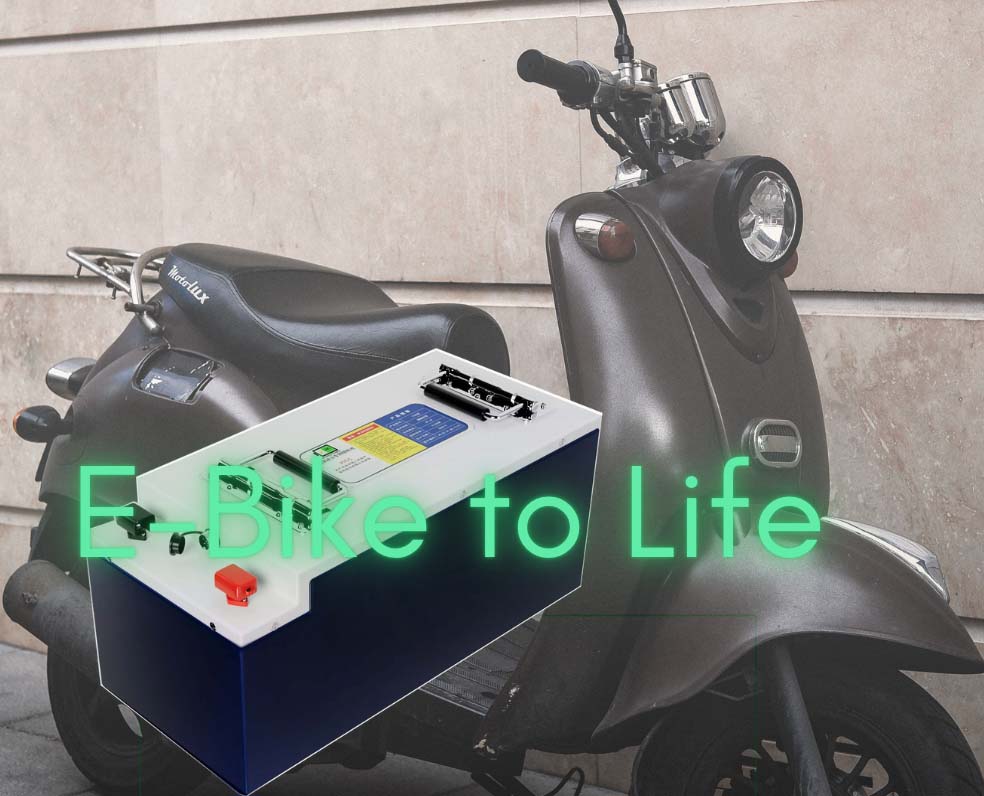
Have you ever wondered why two electric bikes with the same nominal 60V battery can have such different ranges? It mainly comes down to battery type, voltage, and capacity. Today, we’ll take a fun, easy-to-understand look at EV batteries and how they affect your ride.
1. LiFePO4 vs NCM: Voltage Comparison
First, let’s look at the two most common types of electric bike batteries:

LiFePO4: Safe, stable, and long-lasting, but slightly lower voltage per cell.
NCM (Lithium Nickel Manganese Cobalt): Higher voltage and slightly better range, but more expensive and needs better thermal management.
Tip: Don’t just look at the nominal voltage; fully charged and empty voltages determine actual usable range.
2. Example: 60V LiFePO4 Battery Voltage Calculation
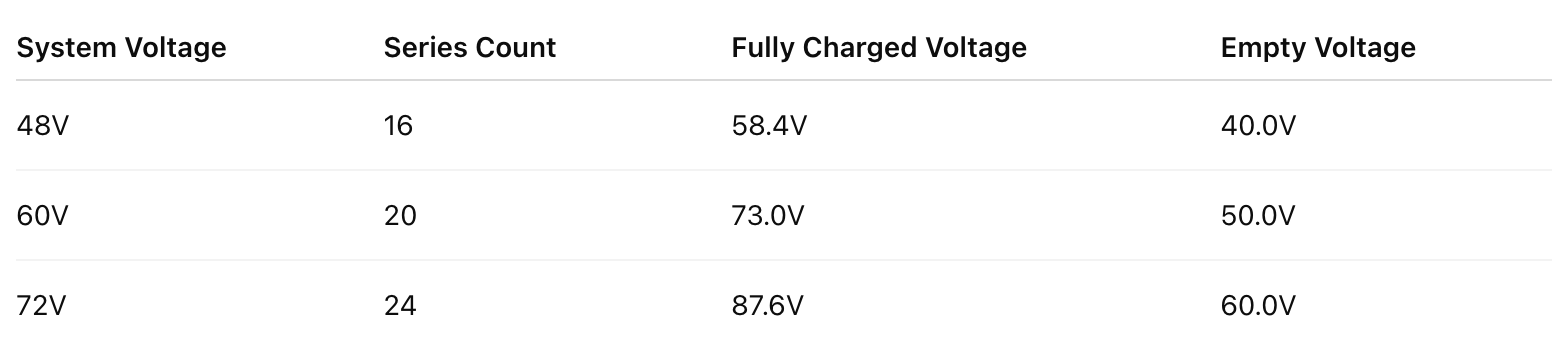
If your bike uses 20 LiFePO4 cells in series (nominal 60V), here’s what the voltages look like:
Fully charged voltage: 3.65 × 20 = 73.0V
Nominal voltage: 3.20 × 20 = 64.0V
Empty voltage: 2.50 × 20 = 50.0V
This means even with a 60V nominal battery, the voltage can reach 73V when fully charged and drop to 50V when almost empty.
3. Common Battery Series Counts
LiFePO4 Batteries
NCM Batteries
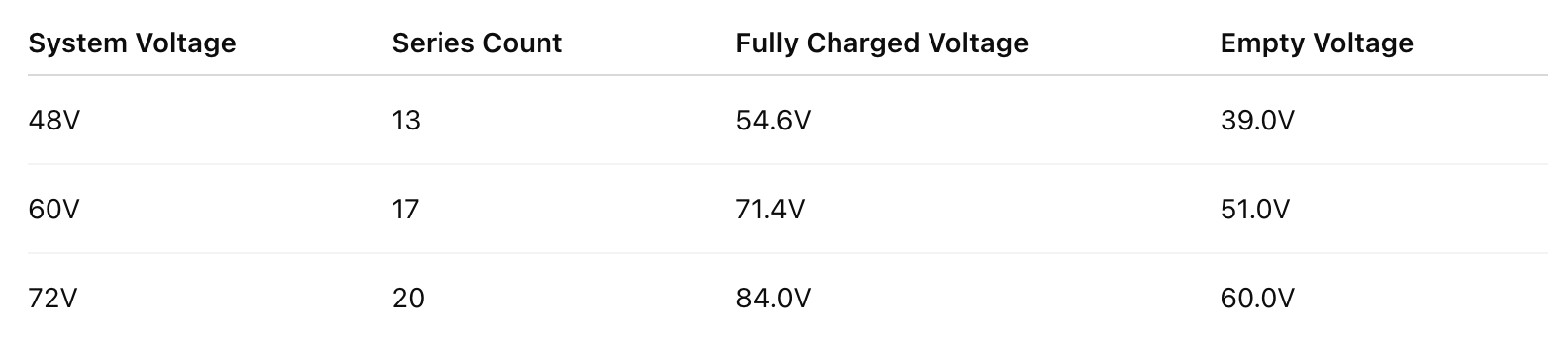
Tip: NCM batteries have higher voltage per cell, so fewer cells are needed in series for the same system voltage.
4. How to Calculate EV Range
The range calculation formula is simple:
Example: 400W motor, 25 km/h
48V 12Ah: 48 × 12 ÷ 400 × 25 ≈ 36 km
48V 20Ah: 48 × 20 ÷ 400 × 25 ≈ 60 km
48V 32Ah: 48 × 32 ÷ 400 × 25 ≈ 96 km
Remember: Higher capacity = longer range; more powerful motor = faster battery drain.
5. How to Choose a Battery
Prioritize safety and durability → Choose LiFePO4
Prioritize range → Consider NCM
Capacity planning → Choose battery capacity based on your riding needs
Tip: For daily commuting, 48V 20Ah is usually enough. For long trips or high-power motors, consider 60V or higher capacity batteries.
Conclusion
Knowing your battery type, voltage, and capacity helps you calculate your EV’s range and choose the right battery. Ride further, ride smarter, and extend your battery life—these are essential skills for any electric bike enthusiast!
RELATED NEWS
Categories
Latest News
Contact Us
Contact: Teresa
Phone: 0086 15158984395
E-mail: info@lnclibattery.com
Whatsapp:008615158984395
Add: 2313A18, A build, Xinghe century, #3069, Caitian road, Gangsha, Futian street, Futian district, Shenzhen city, Guangdong province, China
